Friday, February 26, 2021

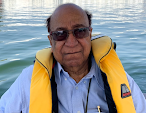
Dr Ramesh Prasad Sinha (1943–2021)


                                                                    Photo courtesy PC Hariharan

A great reason to go to work in a place like Tata Institute of Fundamental Research is that you get to meet and work with friends like Ramesh. We entered TIFR at about the same time in 1964, I as an IIT Bombay graduate and he as a graduate of what is now the BARC Training School. We were both interested in science in general and had formal training in multiple disciplines.

It is not uncommon for scientists to be very focused on their discipline. This was not our cup of tea! Ramesh and I had broad interests in science, and we had friends in many disciplines. Knowing Ramesh was to me like having a pass to audit courses in physics and astronomy. Another benefit I got from being a friend of Ramesh was getting to know several of his training school colleagues. One of them, Dr PC Hariharan, continues to be a friend to this day.

Ramesh and I got to meet soon after joining TIFR, more or less on the same day in 1964. Ramesh had earned an MSc in maths at Allahabad University and a master’s in statistics at ISI, Calcutta. Subsequently, he did the one-year post-graduate course at the Atomic Energy Training School, focusing on physics. He came to TIFR to do physics and had a keen interest in astronomy.

Our Work on Computers for Handling Telescope Data

This was the time a new breed of small computers, designed for handling scientific data and for online control of instruments, was hitting the market. Prof Govind Swarup, who headed Radio Astronomy at TIFR, was keen to utilize this type of computer to enhance data handling at the Ooty Radio Telescope. Ramesh and I teamed up together to make plans. There was a Varian Computer which met our expectations that was affordable. If I remember right, it was the Varian 620/i priced closer to 10,000$ than to 20,000$, and the US$ was worth only 25 Rupees. But getting dollars to import scientific computers was not that easy. If there had been a local agent, his commission could have been paid in rupees and we would need to ask for fewer dollars, but there was no local agent. There was no choice but for us to call up businessmen to ask if they would become the local agent of Varian! At the request of the purchase section, Prof MGK Menon, the Director, TIFR, made this call!

Blue Star agreed and our job of importing the computer became easier. Labs outgrow their computers like children outgrow their jeans. Ramesh and I teamed up again, to do the preparatory work to select a computer, and seek Government permission to import it.  A new phenomenon had to be faced now. Computer users, including major astronomy groups in the world, were making their software available free to each other. It did not matter if a computer was costly or cheap; it did not matter if it was relatively fast or slow! What was needed was the one which had the largest collection of usable astronomy software, ideally ready to plug and play. Ramesh and I went to Delhi and tried to convince the officials of our case for a Vax 780 computer. But they seemed to be under strict orders to minimize spending scarce foreign exchange on importing such things as computers! Finally, the Radio Astronomy Group did succeed in getting its VAX 780.

When Ramesh Received Homi Bhabha as a Visitor

The Ooty Radio Telescope site was inspected by Homi Bhabha before being finalized. Ramesh was the guide when Dr Bhabha went to inspect the site. (Prof Govind Swarup was being treated for a medical problem at the Breach Candy Hospital in Bombay at that time).  Swarup and Ramesh had done a lot of the searching of possible sites. The north-south slope of the ground had to be such that the telescope site could support a cylindrical radio telescope parallel to the ground and to the earth’s axis. It had to be large enough to house a telescope that was over 500 meters long 30 meters wide. It did not matter if leopards came for occasional visits!

A couple of years after work had begun on the telescope, Usha and I had been in Ooty for our honeymoon. Ramesh and Sudha gave us lunch at their place. We risked a leopard encounter in the interest of astronomy and visited the telescope site! Even now, you can ask Usha the latitude of Ooty. She will give you an answer accurate to 3 significant places!

Ramesh took keen interest in science, attended all important talks and read a lot. He also spoke his mind. However, he developed the feeling that the approach of using lunar occultation to get accurate measurements of radio sources was being given too much importance in the Group. He kept arguing for using Interplanetary scintillation as an alternative tool to enhance the accuracy of telescope observations. He encouraged many younger members of the team to look into this possibility. However, he did not choose to do some of this work himself and write a thesis. The Group was deep into a survey of the sky using the Lunar Occultation technique. One could not persuade them to take their focus away from this.  

Much later, in 2011, Ramesh looked back at his Bombay and Ooty years.  

In response to a question[1] about his papers, this is what Ramesh said, (covering only his work in India).

“I’ve been very poor at publishing papers. I ’ve been an idea man who’d work in a team, get things done, would not put my name up. So, (he lists papers that he wrote) two papers from Kalyan telescope. The paper announcing the construction and the completion of the Ooty telescope. Paper on pulsars, and no paper on Inter Planetary Scintillation”. He was in science because it was exciting. He was not in any hurry to earn a PhD. He preferred to go to the USA and do a PhD from scratch, taking courses and all.

Ramesh at the University of Maryland    

I met him a few times in the USA, when I was at the Carnegie-Mellon University, Pittsburgh, for a couple of years. Pittsburgh was not far from College Park, MD, where he and Sudha lived. I have been in touch with him later, meeting him several times during his Indian visits. However, the frequency of meetings could not be compared to what it used to be at TIFR. This was a great loss to me as the developments in astrophysics and cosmology in the decades since 1971 have been phenomenal. If I had been in touch with Ramesh, I would have understood more of it than I now do.

Ramesh, on the other hand, got into the thick of all that. Some of his work continued to involve big telescopes. After earning his PhD, he worked with the big telescopes at Green Bank, and wrote the calibration scheme of the Very Large Array in New Mexico.

Ramesh and a great experiment in astronomy, COBE 

There has been a great tradition in Physics of flying sophisticated experiments above the bulk of the atmosphere using high altitude balloons. Microwave radiation streaming in from all directions of the cosmos has also been studied this way. The radiation had seemed to be quite uniform, which could not be explained. The universe must have had seeds of the huge structures we see now, and the seeds must be seen in the radiation. Huge galaxies occur in big clusters and there are huge voids where there is nothing. Some astronomers found that the huge clusters of galaxies were attracting other galaxies gravitationally, making them move very fast. The time had come to put sophisticated experiments on satellites, to study all this better. In mid-Seventies, Nasa invited proposals for satellite-borne experiments. It took years for a project proposed at that time, named the Cosmic Background Explorer (COBE), to be launched. Ramesh contributed significantly to the design and implementation of the systems to collect and analyze data from this satellite.  

COBE achieved a lot. It confirmed that the cosmic background radiation was black body radiation at 2.725 deg K plus/minus 0.002 deg K. This was a necessary finding to confirm the theory that the universe arose in one big bang. The finding indicated that nearly all radiant energy of the universe was released in the first year after the bang. COBE also showed that the background radiation was not really uniform. It showed non-uniformities at the level of 1 in 100,000 in conformity with expectations from the great structures we observe of galactic clusters and voids. COBE also carried out surveys of Cosmic Infrared Background, and detected several galaxies which had formed very early in the evolution of the universe.


Image Credit: NASA
https://lambda.gsfc.nasa.gov/product/cobe/

COBE’s results have stood the scrutiny of comparison with results from two later satellite missions asking similar questions and using more sophisticated instrumentation. Not surprisingly, two Principal Investigators of the project John C Mather and George Smoot earned Nobel Prizes, in the year 2006. COBE had involved more than 1,000 researchers, engineers and other participants. John Mather had coordinated the entire process and also had primary responsibility for the experiment that revealed the blackbody form of the microwave background radiation. George Smoot had main responsibility for measuring the small variations in the temperature of the radiation. These were the evidence of the seeds for the huge clusters and voids that were to come. George Smoot calls them wrinkles in time. The clusters and voids that came out of these seeds were big enough to shape the fabric of space time around them, according to the theory of relativity.

Ramesh had worked in Mather’s team. It was a fitting finale to his lifelong work in astronomy, astrophysics and cosmology.

After the COBE project’s conclusion, Ramesh worked for some more time with NASA. During this time, he led the support for various NOAA/NASDA sea surface measurement efforts.         

Acknowledgement: I thank Velu Sinha, Ramesh's son and PC Hariharan, Ramesh's friend, for having read through my draft and giving me their comments.   

References:

1)  https://lambda.gsfc.nasa.gov/product/cobe/ for the image

2)  https://www.nobelprize.org/prizes/physics/2006/summary/


[1] From an interview by Ms. Indira Choudhury with Ramesh in 2011. Indira is now at the Srishti Institute for Design in Bangalore. She had worked at TIFR. You may find the transcript of the interview in the TIFR Archives. Incidentally, the interview was held at my home in Bangalore.

Monday, December 7, 2020

Dr Faqir Chand Kohli has passed away

Dr FC Kohli (19 March 1924 – 26 November 2020) was a great mentor. He was the founder and first CEO of the Tata Consultancy Services. His role in developing TCS into a leading software company has been recognized in various ways. He has been named the Father of the Indian Software Industry; the Government had conferred the Padma Bhushan Award on him. Seven or eight universities conferring honorary doctorates on him have indicated the esteem in which academics have held him.

I have had the fortune of benefitting from his mentorship during my career. I will focus here on the first few years I had known Dr Kohli. Some of you would know about his work for the Tata Electric Company, and later for the Tata Consulting Engineers. It was during 1965-67 that I first met him. Tata Electric was getting interested in computerizing data acquisition at its power generating stations. The plan was to start in this manner and then gradually build up to implement computer control and load balancing. I was assisting the Radio Astronomy Group at the Tata Institute of Fundamental Research to plan for computerizing data acquisition at their radio telescope using minicomputers. Dr Kohli came over with a couple of colleagues to visit us. I got to visit the thermal generating station at Chembur and later a hydro-electric station in Lonavala.

A few years later, TIFR Radio Astronomers started designing and building their Giant MeterWave Radio Telescope (GMRT), one of the biggest structures I ever got to see being planned. It was a precision structure, and a one-of kind structure for its designers. Tata Consulting Engineers (TCE) had been selected by Prof Gobind Swarup, the Scientist leading the project. TCE was to do some structural engineering for the GMRT. Dr Kohli was the Director in Charge of TCE at that time. TCE was in the early years of using a large computer to do big-time structural engineering. I was in the TIFR Computer Group which was running a large computer (a CDC-3600) which we made available for institutions such as TCE.

So, I had the pleasure of seeing Dr Kohli work as a power engineer, as a high-tech engineering consultant in structural engineering, and as a top-level manager. I had the privilege of being treated as a member of his extended team, and being given privilege to ask the expert himself  and to learn from him.

Then came IT revolution which changed the face of India for a few millions of us, besides making a significant contribution to the Indian economy. Dr Kohli, with his unique range of experience and skills took charge of TCS. One small event during his years at TCS is particularly memorable to me. He invited our team at TIFR to play a small role in a project of TCS. We had completed designing a state-of-the-art message switching system using an up-to-date minicomputer and up-to-date software including a high-level programming language. TCS got an order for a message switching system from a multi-national company which was the leading supplier of message switching systems in the world at that time. We made our computer and software available to TCS as development tools for use in this project. For me, what was special was the TCS invitation to give a presentation along with the TCS team to the visiting client team, describing our experience in implementing an up-to-date message switch. Implicit was the understanding that if the TCS team needed to consult us any time, we would be available. The TCS team did not need that consultation but our software development resources played their role.

The Computer Society of India had been founded in 1965. My mentor at TIFR, Prof R Narasimhan was the founding President. Prof V Rajaraman, Gen Balasubramanian, Dr Kohli and Dr PP Gupta were some of the pioneers who played a leading role in setting CSI on the right path. As a young scientist at that time, CSI gave me great opportunities to work with pioneers.

I had written in 2014 an article Growing up with the Computer Society of India! http://obvioustruths.blogspot.com/2014/06/srinivasan-ramani-and-computer-society.html (posted on theoccasion of the Golden Jubilee of CSI). I invite the reader to read this article to learn about my experience of working with Dr Kohli.     

Some closing comments: The basis of the IT revolution was the recognition that the skills of Indian professionals were worth a lot on the international market and that Indian Corporates could find a big market abroad for these skills. However, this needed high standards of leadership and commitment to customer interests. When Dr Kohli pitched a fledgling TCS in this arena, very few realized that one day not far into the future India would succeed in a very impressive manner in creating an entirely new industry. An industry that would grow up to rival the whole of agriculture in its contribution to the Indian GDP. The contribution of TCS has been very substantial. Even today, TCS earns over 10% of the revenue earned by the whole of the Indian software industry. In addition, the TCS experience has been valuable to many leaders who went on to found their own IT companies.

Very few engineers have been as successful in their quest as Dr Kohli has been in his.       

7-Dec-2020


Saturday, November 14, 2020

Hawa badal rahi hai: Air Quality is better in Bangalore on Deepavali


I looked up https://aqicn.org at 8 PM on Saturday, and was happy to note that air quality in Hombegowdanagar, Bangalore,  was “Moderate”. Usually, it would be Unsatisfactory on normal days. That it is Moderate on Deepavali is amazing. It shows the ability of the Govt and Corporation to control the usage of crackers and cooperation from the people. At this rate, India would progress fast! Perhaps this discipline also explains how India has been able to control the Covid-19 pandemic reasonably well.


Visit  
      https://aqicn.org/city/india/bengaluru/hombegowda-nagar/  

It is a great site.

My sister is a bit of a sceptic. She says that the improvement in air quality could be due to some rain we had yesterday. She says some parts of Bangalore got some rain today too. 

Srinivasan Ramani


Wednesday, September 9, 2020

Prof Gobind Swarup (March 23, 1929 – September 7, 2020)


Photo from Twitter Tribute    

 A very well made photo-essay on Prof Swarup can be found at https://artsandculture.google.com/exhibit/govind-swarup-pioneering-radio-astrophysicist-tata-institute-of-fundamental-research/KQIylXP1ZillIg?hl=en

The Wikipedia article on him offers a brief description of his scientific contributions.  

I will say a few words here about my memories of Prof Swarup. My friend Ramesh Sinha and I joined Tata Institute of Fundamental Research more or less at the same time, in 1963. Ramesh joined the Radio Astronomy Group of TIFR. I was completing my project work for my IIT M Tech as an intern in the TIFR Computer Group during the first year and was recruited by TIFR in 1964. Swarup was a member of the Selection Committee that had interviewed me. He was deeply interested in the work I was doing in the computer field – building a real-time data acquisition system. He was keen to equip the Ooty Radio Telescope he was building with an UpToDate data handling system including a real-time computer. Minicomputers were coming of age then. I became an informal consultant to the Radio Astronomy Group. Ramesh and I enjoyed participating in the teams’ decisions in buying India's earliest real-time computers. I had a serious interest in Radio Astronomy and had a number of friends in the group.

An interest I shared with Swarup in later years was education. I will touch upon this by mentioning a June 2011 letter he had written to four of us. It included a copy of an email from another radio-astronomer, Prof Ananthakrishnan, describing a visit to a school with 2600 students. Ananth had been asked to address the top hundred students and found that not one had an idea of wavelength of light, distance of the earth from the Sun, the nature of stars, etc. He pointed out that students were more interested in getting marks in competitive exams and less in real learning. Swarup agreed, and decided to do something about it. He thought often about Indian education in general and what can be done about it. This made him attach to his email a brilliant article by Sanjay Srivastava, “The End of Education”, published in the Open Magazine:
https://openthemagazine.com/features/living/the-end-of-education/ For those of you who want to read more in this direction, I will mention another excellent article: “How Kota became India's capital for educational coaching”,

https://www.business-standard.com/article/current-affairs/india-s-garish-free-market-in-education-115123100033_1.html

Prof Swarup’s prodding usually worked at different levels and has had good effect, but talking it about requires another article.

Another act of Prof Swarup that had touched my heart was his attempt to run science related activities for school children in and around the villages surrounding the Giant Meterwave Radio Telescope that the National Centre for Radio Astronomy built under Swarup’s leadership.

A great mind and a caring heart do go together!  Then you find a rare human being, like Swarup! 

Srinivasan Ramani 


Sunday, August 9, 2020

I didn’t know that smoking was this costly!


I saw an advertisement selling term insurance. The monthly premium was Rs 500 or so. There was a question: do you smoke? You could press a button saying yes and find how the premium would change because of this information. I pressed the button though I am not a smoker to see the cost of this habit. The premium went up to Rs 800!

I did not store a link to that advertisement. But searched the web again for the connection between disease and smoking, and found this:

https://www.icicilombard.com/insurance-information/health-insurance-info/article/what's-killing-india-knowing-top-10-killer-death-diseases-in-india

The article shows causes of death in percentage terms and lists main causes. In some cases, it advises on prevention, by asking you not to smoke or “to avoid consuming tobacco”. The numbers are as follows:

Disease                                              Listed Main Cause                      Listed Prevention Method

Cardiovascular Diseases                 24.8%                                           Avoid Consumption of tobacco         

Respiratory Diseases                       10.2%                                           Avoid Smoking

Malignant & other tumours             9.4%                                           Avoid Tobacco Usage

Digestive Diseases                              5.1%                                           Quit smoking and avoid alcohol

Tuberculosis                                      10.1%  

However, WHO says A Strong Association is: Smoking substantially increases the risk of TB and death from TB.   https://www.who.int/tobacco/resources/publications/factsheet_tb_tobacco_sep09.pdf

How dangerous is Covid-19 compared to the Tobacco Epidemic? Confirmed Deaths due to Covid-19 as of 9-Aug-2020 have been 43,379. The total number of deaths in India per year is approximately 95 Lakhs according to Wikipedia.

Srinivasan Ramani


Thursday, June 25, 2020

Let us look fifty years ahead (Talk Delivered at VJTI)


·       If you buy a bike today, it may serve you five to ten years, but the degree you earn today will serve you about fifty years or more. I look back to 1962 when I earned my first degree. I thought of what my life was going to be and what choices I would make. What would be fast-growing technologies? What kind of jobs would be available? My principal had told me not to risk getting into newfangled topics like electronics! “Do your electrical engineering”, he said, you will never worry about a job, there will always be Rs 150 per month in the electricity board! If you like, you can do post-graduate study in electronics after your B.E.! To simplify my task, he turned down my application to transfer to a sister college where I had to go for electronics!
·       What can I tell you that would help you look ahead a little better? A lot of scholars have tried to look ahead and written about their findings. Reading relevant books can make your looking ahead successful.  This reading if continued life-long can give insights all your life. After all, it is not as if you can make all your decisions for your career by Dec 31!
·       I will attempt in the time available to share a broad perspective with you. You will now make the decisions I had to make, like going abroad or not, and if so, when to return. I went abroad in 1971 and returned in 1973. India today is very different than what it was when I returned in 1973. There was a rationing of milk! I could not buy butter easily; the shop keeper would sell butter only to those who bought a loaf of bread as well! We have now Indian milk production at three times the per capita level we had in 1973. Life is a lot easier for the average Indian than it was in those days, so it is even easier to return now, but still it is not a bad idea to go abroad to get better learning opportunities, to get a better professional background, and to enjoy combined opportunities to learn and work for some time. But come back! You are needed here!
·       Let me come back to the economy. As I see it, the basic challenge of life in India is this.  We get a ton of rain water per year and solar energy equivalent to 5.5 KWh per day for every Sq. M of land, along with several other things.  We have to use these as efficiently as we can and manage within these limits. Can’t we?
·       What about capital? We seem to have more money as market cap in the Indian capital markets than Germany! About 2.12 Trillion $. The people may be poorer, but they are saving 30% of the GDP every year! Some of that saving goes into industry and creates jobs for young people. As more young people come out of school, our population becomes a better-educated one every year. 
·       How good India’s economy is going to be will depend upon how well-educated our young people are. Statistics show that if you looked at Indians 20-24 years old in 1970, their average length of schooling had been only 3 years. If you like at a similar group of Indians now, you find the average schooling is 8 1/2 years. The average is going up every year.  Don't sneeze at it! The average years of schooling for Japan in the year 2000 was 91/2 Countries Compared by Education > Average years of schooling of adults. International Statistics at NationMaster.com 

·       What about jobs? As a student, I had learnt that India was a developing country, mainly dependent on agriculture. India has changed since then. Agriculture gives us 15.4 % of our GDP. Oil & Petroleum industries give it 15%. Manufacturing gives it 16%. Auto industry gives it 7.5%. Information Technology gives it 7.7%. Banking & Finance sectors give 7.7%.
·       You may wonder why you need to hear about the economy and about different sectors. Many companies, particularly in the IT sector, expect employees to have domain knowledge in one or more sectors of the economy. Every one of these sectors hires engineers. Even Banking & Financial sectors also hire their own share of engineers. Enterprising engineers who start a business also have opportunities to work in any of these sectors.
·       There is another reason to be aware of economic issues. Look at how fortune turns. When I passed out of college, one of the high technology fields I admired was nuclear energy. Now, look at the economics of nuclear power plants. Each plant location needs an exclusion zone, 3 km in diameter around it, to limit the risk of any adverse incident. What is the cost of such a piece of land? Who wants to live near it? How much nuclear power will you generate there? A few gigawatts? How much solar energy can you generate from the same piece of land? At what cost? Do we need nine sq. km in one piece for solar energy?
·       There are huge forces at play reshaping the world. We need to be aware. I don’t think it would hurt a young engineer to take a map of a coastal city, say Mumbai, Goa, Ratnagiri, Kolkata or Chennai, and draw contour lines showing low-level areas. Which of these areas would lose commercial value due to climate change in your lifetime? 
·       On October 5, 1973, my wife and I returned after two years stay in the USA. Ours was a TWA flight from Pittsburgh to Mumbai via Jerusalem. We landed in Mumbai and learnt that a war had broken out in the middle east. The price of petrol went up five times in the aftermath of that war. Can you imagine what changes an event like that can bring in the careers of young engineers?
·       One of the things it did was to encourage researchers to develop more efficient batteries. Three of them developed the lithium-ion battery which has brought us closer to the electric car. They won a Nobel prize in 2019.
·       Their science is working for the world already. Our cell phones would not be what they are without these batteries. There are even one-lakh rupee electric bikes available in India now. What do you think would happen to electric cars in India in your lifetime?
·       Look at the LED revolution. Their usage in India has gone up more than ten times during 2012-2018.
·       Consider what is happening to some cities in the north due to air pollution. The cost of disposing of stubble left over after the harvest poses a major problem and endangers peoples’ lives. Who can save them? Obviously, engineers can and should do that.
·       Also consider what app-controlled cabs have done: created over a million part-time jobs for drivers and have even reduced the demand for car purchases.
·       So, air pollution is not the only problem that engineers can handle. Traffic problems, water supply problems, employment problems, affordable housing problems, a whole lot of these are our problems. We design and implement the solutions. It would be necessary in future for engineers to be involved in dealing with problems from the policy level downwards. I am glad that two of your alumni are already senior ministers!
·       Let me conclude by saying you are going to have your hands full. There are lot of problems to tackle. There are lots of opportunities. You can bet that the India of the 21st century would be a great place to live and contribute. I offer my best wishes to you.    
end

Monday, April 13, 2020

The victory of the Sapiens


Coronavirus child in mask
Photo: Via Wikimedia, Author: www.vperemen.com / CC BY-SA


My cousin and his wife, living in the US, had bought tickets to come to India on the 23rd March 2020. Then came the deluge, what my cousin called the pralaya. Visit YouTube for a visualization https://www.youtube.com/watch?v=F9D5sqgqEYA , but don’t take it literally. What descended on us this time was what our prime minister correctly named a MahAmArI, a plague! 

Widespread disease and death is not a stranger to India. Tuberculosis has been killing over 200,000 Indians every year over the last few years. 
What is new now in the case of Covid-19? A worldwide response based on a few widely accepted ideas. One powerful idea is that of the germ theory of disease, in this case that the infection is caused by a virus. The other is an idea of a very fast and exponential spread of infection. The idea that the disease could spread even ten times within two or three weeks. That it could kill hundreds of thousands in a month or two. Such evidence-based understanding of a pandemic has been rare in the population as a whole. 

The author Yuval Noah Harari has argued that only humans are capable of cooperation on the large scale and in a flexible manner, including cooperation with strangers. The use of sophisticated language for communicating a variety of ideas no doubt makes this possible. The worldwide modification of behavior, including lockdown on a very large scale, social distancing, use of masks and frequent handwashing with soap have not been adopted as fast anywhere earlier as they took place over the last few months. They were never as effective. The cooperation went beyond all forms of tribalism and nationalism. The phenomenon clearly demonstrated what Harari had described.

Social engineering has succeeded where genetic engineering is asking for 18 months to produce a usable vaccine!
Is this a turning point in human history? What can we achieve if we perfect this technique, communicating with people, persuading them to do work together to achieve a common goal? 

Can we defeat an enemy like tuberculosis? It is a disease with strong socio-economic dimensions. It does not yield to any simple treatment with one or two medicines. Human commitment and social care would probably be essential to defeat it.

I have a glimmer of hope, that Indo-Sapiens will at last be able to do something in this direction.
Srinivasan Ramani